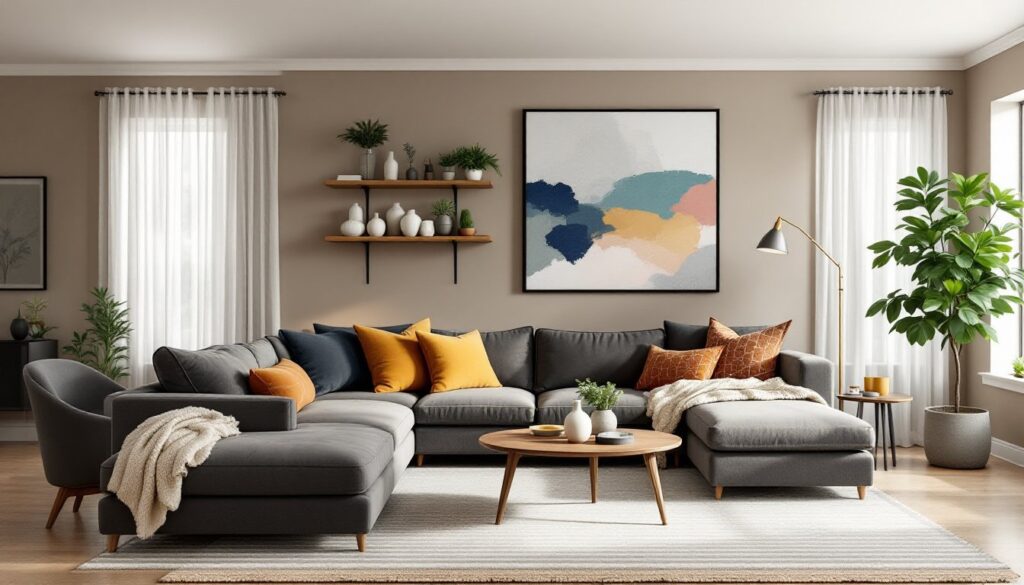
Grey has become the go-to neutral for homeowners who want sophistication without the stark coldness of white or the heaviness of beige. It’s a chameleon color, shifting from warm and cozy to cool and modern depending on undertone, lighting, and what you pair it with. A grey living room isn’t boring when done right. It’s a canvas that lets furniture, art, and textiles shine while holding the whole room together. Whether someone’s painting walls, choosing a sofa, or layering throw pillows, understanding how grey works in a space makes the difference between a room that feels flat and one that feels finished.
Table of Contents
ToggleKey Takeaways
- Grey living room decorating works best when you select the right shade based on light reflectance value (LRV) and test samples at different times of day to match your room’s natural light exposure.
- Layered lighting with ambient, task, and accent sources prevents grey from absorbing light and creating a dim, cave-like atmosphere.
- Accent colors like mustard, navy, or terracotta are essential to prevent a grey living room from feeling lifeless and add energy or sophistication depending on your chosen palette.
- Mixing textures—velvet, linen, wood, metal, and stone—creates visual depth and prevents monochromatic grey spaces from feeling one-dimensional.
- Grey’s neutral foundation and timeless appeal make it an excellent choice for long-term homeowners, as it doesn’t date like trendy colors and allows flexibility to change accent colors over time.
Why Grey Is the Perfect Foundation for Living Room Design
Grey works because it’s neutral without being invisible. Unlike beige, which can skew yellow or pink under different light, grey stays consistent. It doesn’t compete with accent colors, wood tones, or metal finishes. That makes it ideal for rooms where furniture and decor will change over time.
From a practical standpoint, grey hides wear better than white. Scuffs, shadows, and minor imperfections blend in rather than standing out. It also pairs well with both warm and cool palettes, which means homeowners don’t need to overhaul the room if they switch from navy accents to terracotta down the line.
Grey living rooms also photograph well, which matters for resale value. Real estate listings benefit from rooms that look clean and modern without appearing too personalized. A neutral grey wall lets potential buyers imagine their own furniture in the space, which is harder to do with bold color choices.
Finally, grey doesn’t date the way trendy colors do. While certain shades come and go (greige, charcoal, dove), the color family itself has staying power. That longevity makes it a smart choice for anyone planning to stay in their home for more than a few years.
Choosing the Right Shade of Grey for Your Living Room
Not all greys are created equal. The difference between a room that feels like a cozy den and one that feels like a dentist’s waiting room often comes down to undertone and light reflectance value (LRV). LRV measures how much light a color reflects, with 0 being pure black and 100 being pure white. Most livable greys fall between 50 and 70 LRV.
Before committing to a paint color, test samples on multiple walls. Paint a 2×2-foot square and observe it at different times of day. Morning light, afternoon sun, and evening lamplight all shift how grey reads. A color that looks perfect at noon might turn purple or green under incandescent bulbs.
Consider the room’s natural light. North-facing rooms get cooler, bluer light, which can make grey feel icy. South-facing rooms get warmer light, which softens cooler greys. East and west exposures shift throughout the day, so flexibility matters.
Warm vs. Cool Grey Tones
Warm greys contain beige, taupe, or greige undertones. They work well in rooms with limited natural light or spaces where the goal is coziness. Warm greys pair naturally with wood furniture, brass fixtures, and earthy accent colors like rust, olive, or caramel. They’re forgiving in rooms where artificial lighting dominates. Examples include Sherwin-Williams Agreeable Gray (LRV 60) or Benjamin Moore Revere Pewter (LRV 55.51).
Cool greys lean toward blue, green, or violet undertones. They create a crisp, modern look and work best in rooms with ample natural light. Cool greys pair well with chrome, black accents, and jewel tones like emerald, navy, or plum. They can feel stark in windowless spaces or under warm-toned lighting. Examples include Benjamin Moore Classic Gray (LRV 74.26) or Sherwin-Williams Repose Gray (LRV 60).
The flooring also affects how grey reads. Grey walls with warm oak floors need a warmer grey to avoid clash. Grey walls with dark walnut or tile floors can handle cooler tones. Always bring home samples and hold them next to existing finishes before buying paint.
Accent Colors That Elevate Grey Living Rooms
Grey needs a partner. Without accent colors, a grey room can feel lifeless. The key is choosing colors that either warm up or contrast with the grey base, depending on the mood.
Warm accents include mustard yellow, burnt orange, terracotta, blush pink, and camel. These colors add energy and prevent grey from feeling cold. They work especially well in rooms with cool-toned grey walls. A terracotta throw pillow or mustard accent chair can completely shift the room’s temperature.
Cool accents include navy blue, forest green, plum, teal, and charcoal. These create a sophisticated, layered look without adding warmth. They’re ideal for modern or minimalist spaces. Navy and grey is a classic pairing that feels timeless, while forest green adds depth without overwhelming the palette.
Neutral layers include white, black, cream, and natural wood. These don’t technically count as accent colors, but they’re essential for balance. White trim and ceiling molding brighten a grey room and define architectural features. Black accents, like picture frames, light fixtures, or cabinet hardware, add contrast and prevent the room from feeling washed out.
For a cohesive look, many designers recommend using patterns that incorporate home decoration approaches mixing the grey base with two or three accent colors. A patterned rug, for example, can pull together grey walls, a navy sofa, and mustard pillows without feeling chaotic.
Furniture and Textile Choices for Grey Spaces
Furniture in a grey living room should either contrast or layer with the wall color. A grey sofa on grey walls can work, but only if there’s variation in tone or texture. A charcoal velvet sofa against light grey walls creates depth. A light grey linen sofa against medium grey walls needs bold pillows or a dark coffee table to avoid blending in.
Sofa upholstery matters. Linen and cotton fabrics in grey feel casual and lived-in. Velvet and chenille add richness and texture. Leather in grey tones (especially charcoal or slate) adds durability and works well in high-traffic homes. Avoid flat, shiny fabrics, they can look cheap under certain lighting.
Wood tones bring warmth and contrast. Walnut, oak, and teak all pair well with grey. Mid-century modern furniture in warm wood tones balances cool grey walls. Painted wood furniture in white or black works in more transitional or farmhouse-style spaces.
Textiles are where grey living rooms come alive. Throw blankets, pillows, and area rugs add color, pattern, and texture without commitment. Layering different shades of grey with pops of color prevents the room from feeling flat. A jute or sisal rug grounds the space and adds natural texture. Velvet or faux fur throws add softness.
Curtains or drapes in grey can either blend with the walls or provide contrast. Sheer white curtains lighten the room, while heavier grey or patterned drapes frame windows without competing with the wall color. Blackout-lined curtains in a grey living room are practical for TV viewing or afternoon naps.
When selecting furniture, consider scale. Oversized sectionals in grey can dominate a small room. In larger spaces, a grey sectional anchors the seating area and provides flexibility for entertaining. Modular pieces allow homeowners to reconfigure as needs change.
Lighting Strategies to Enhance Grey Interiors
Lighting makes or breaks a grey living room. Grey absorbs light, so relying on a single overhead fixture creates shadows and makes the space feel dim. Layered lighting, ambient, task, and accent, keeps the room from feeling cave-like.
Ambient lighting provides overall illumination. Recessed lighting (also called can lights) works well in modern spaces, but they should be dimmable to adjust brightness throughout the day. A central ceiling fixture, like a chandelier or pendant, adds style, but it should be supplemented with other sources. LED bulbs in the 2700K to 3000K range (warm white) prevent grey from looking too blue or sterile.
Task lighting includes floor lamps, table lamps, and reading lights. These should be placed near seating areas where people read, work, or use devices. Adjustable floor lamps with swing arms are practical for corners. Table lamps on end tables or console tables add height and visual interest. Shade color matters, white or linen shades soften light, while dark shades direct it downward.
Accent lighting highlights art, architectural features, or decor. Picture lights, track lighting, or LED strip lights behind floating shelves create focal points. Wall sconces flanking a fireplace or sofa add symmetry and warmth. Accent lighting in warmer tones (2700K) adds coziness to grey rooms that might otherwise feel stark.
Natural light should be maximized. Keep window treatments light or sheer during the day. If privacy is a concern, cellular shades or top-down/bottom-up blinds allow light in while blocking sightlines. Mirrors opposite windows reflect natural light and make the room feel larger.
Dimmers are essential. They allow homeowners to adjust lighting based on time of day and activity. Bright light works for cleaning or entertaining, while softer light creates ambiance for movie nights or conversation. Smart bulbs or dimmer switches are easy DIY upgrades that don’t require rewiring.
Texture and Pattern: Adding Depth to Grey Living Rooms
Texture is the secret weapon in grey rooms. Without it, the space feels one-dimensional. Mixing materials, wood, metal, glass, fabric, stone, creates visual interest even in a monochromatic palette.
Wall texture can be added with decorating techniques like shiplap, board-and-batten, or textured wallpaper. A single accent wall in a darker grey or a subtle pattern adds dimension without overwhelming the room. Grasscloth wallpaper in grey tones brings organic texture and softens the space.
Fabric texture includes linen, velvet, wool, cotton, and faux fur. Layering different textures on the sofa, smooth cotton, nubby linen, plush velvet, keeps the eye moving. A chunky knit throw or a sheepskin rug adds tactile interest.
Hard surface texture comes from coffee tables, side tables, and shelving. A reclaimed wood coffee table contrasts with smooth grey walls. A marble or stone coffee table adds luxury. Metal finishes, brass, matte black, brushed nickel, provide shine and contrast.
Pattern should be introduced carefully. Too much pattern in a grey room can feel chaotic, but too little feels sterile. Start with one or two patterned elements: a geometric rug, striped curtains, or floral throw pillows. Patterns that incorporate grey plus accent colors tie the room together. For example, a rug with grey, navy, and mustard pulls in furniture and textiles.
When mixing patterns, vary scale. Pair a large-scale floral with a small geometric or stripe. Keep the color palette consistent across patterns to avoid visual clutter. Solid grey pieces can anchor patterned ones and provide breathing room.
Sustainable materials like reclaimed wood, natural fiber rugs, and organic cotton textiles add texture while supporting eco-friendly design choices. These materials age well and develop character over time, which complements grey’s timeless appeal.
Built-in shelving or bookcases painted in the same grey as the walls create a cohesive backdrop for displaying books, art, and decor. Floating shelves in contrasting wood or metal finishes break up large expanses of grey wall.
Art and wall decor are the final layer. Black-and-white photography suits modern grey spaces, while colorful abstract art adds energy. Oversized art creates a focal point, while gallery walls add personality. Frames should either match the room’s metal finishes or stay neutral in black, white, or natural wood.
Planters and greenery provide natural texture and color. Houseplants in grey or white ceramic pots tie into the palette while adding life. Larger plants like fiddle-leaf figs or rubber trees fill empty corners and soften hard edges.
Finally, don’t forget the fifth wall, the ceiling. A ceiling painted in a slightly lighter grey than the walls creates subtle definition. Exposed beams, coffered ceilings, or ceiling medallions painted in contrasting colors add architectural interest. For rooms with lower ceilings, keeping the ceiling white reflects light and prevents the space from feeling closed in.
The key to a successful grey living room is intentionality. Every element, from the specific shade of grey to the texture of the throw pillows, should work together to create a space that feels cohesive, comfortable, and anything but boring. Grey is forgiving, adaptable, and endlessly customizable, which is why it continues to be a favorite among designers and homeowners alike.