When you’re drilling anchor holes into concrete for shelf brackets or chasing electrical conduit through masonry, a standard drill just won’t cut it. That’s where a hammer drill earns its keep. DeWalt’s corded hammer drills have been job site staples for decades, offering consistent power without the runtime anxiety of batteries. For homeowners tackling basement renovations, outdoor projects, or anything involving brick, block, or poured concrete, understanding what sets these tools apart, and how to pick the right one, can save both time and frustration. This guide breaks down the features, models, and real-world applications that matter most.
Table of Contents
ToggleKey Takeaways
- DeWalt corded hammer drills deliver consistent 7–10 amp power for extended masonry drilling without battery drain or voltage loss during large-scale projects.
- A DeWalt hammer drill with a 1/2-inch keyed chuck and dual-mode switch (hammer/standard rotation) is essential for versatile homeowner applications like anchor holes, ledger board mounting, and basement finishing.
- Corded models cost $100–$180 compared to $200–$400 for cordless alternatives, plus you avoid replacing batteries every few years—making them ideal for occasional to moderate masonry work.
- Always use a depth stop and auxiliary side handle for safety and precision, and maintain your drill by cleaning vents after dusty jobs, inspecting the cord regularly, and lubricating the chuck every few months.
- For large-diameter holes (3/4–1 inch) through thick walls, a 10-amp corded hammer drill maintains speed without bogging down, while a rotary hammer is better suited for demolition work.
What Makes DeWalt Corded Hammer Drills Stand Out
DeWalt’s corded hammer drill lineup delivers consistent amperage that cordless models can’t match during extended use. A corded unit pulls steady 7- to 10-amp power directly from a wall outlet, maintaining peak torque whether it’s the first hole or the fiftieth. This matters when drilling multiple 3/8-inch or 1/2-inch holes through cured concrete, jobs that drain batteries fast.
Build quality separates DeWalt from budget competitors. Their housings use impact-resistant polymer composites reinforced at stress points, and metal gear cases protect the transmission from the repetitive hammering action that destroys cheaper drills. Many models feature all-metal keyed chucks that grip masonry bits securely under the rotational and percussive forces involved in hammer drilling.
Another advantage: variable speed triggers with lock-on buttons. When you’re drilling overhead into a basement ceiling joist or working in tight spaces, a lock-on button lets you maintain constant speed without hand fatigue. Most DeWalt corded models also include a forward/reverse switch positioned for quick one-handed operation, plus auxiliary handles with 360-degree rotation for better control and leverage in any orientation.
Key Features to Look for in a DeWalt Corded Hammer Drill
Amperage rating determines drilling capacity. A 7-amp model handles most homeowner tasks, mounting ledger boards to concrete foundations, installing Tapcon screws, or drilling weep holes in retaining walls. Step up to 8.5 or 10 amps if you’re cutting large-diameter holes (up to 1-1/4 inches) for plumbing penetrations or conduit runs through concrete block.
Chuck size dictates maximum bit shank diameter. A 1/2-inch keyed chuck accepts both standard twist bits and larger masonry bits, giving flexibility for wood, metal, and concrete applications. Some contractors prefer 3/8-inch chucks for lighter-duty work, but the half-inch is more versatile for home projects.
Look for a dual-mode switch that toggles between standard rotation and hammer-drill mode. You don’t want the hammering action when drilling wood studs or metal framing, it tears up the material and wears the tool unnecessarily. Being able to switch modes mid-project saves you from swapping tools.
Depth stops and side handles are often overlooked but critical for precision and safety. A depth stop (usually a metal rod that threads through the handle) ensures consistent hole depth when installing multiple anchors. The side handle provides a two-handed grip that’s essential when the bit binds or the drill kicks, both common when working in masonry.
Finally, check the cord length. A 6-foot cord forces you to work close to outlets or constantly move extension cords. DeWalt typically specs 8- to 10-foot cords, which gives reasonable working radius without excessive cord weight.
Top DeWalt Corded Hammer Drill Models for Homeowners
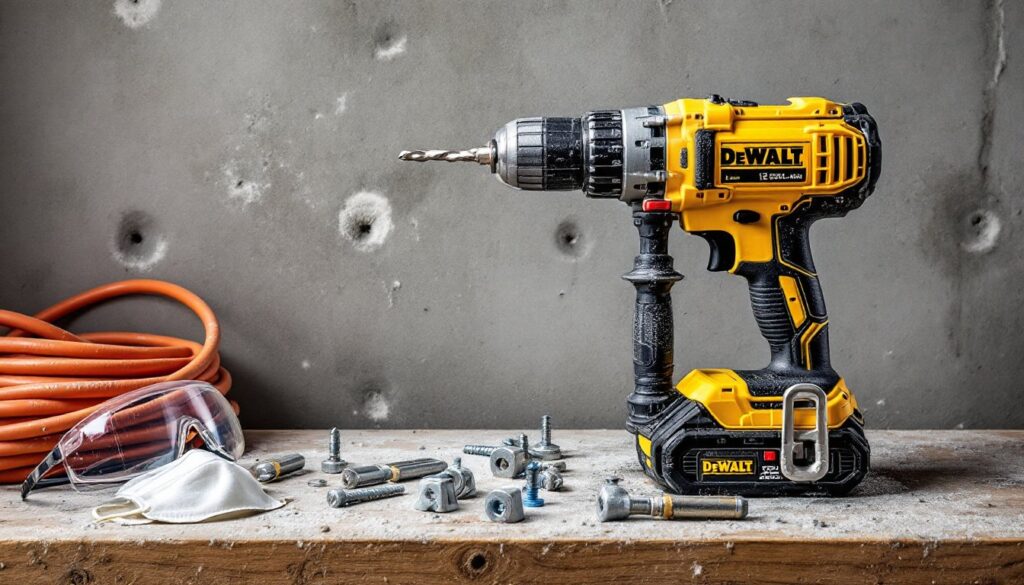
The DeWalt DWD520 remains a go-to model for serious DIYers. Its 10-amp motor spins up to 1,300 RPM and delivers 40,500 BPM (blows per minute) in hammer mode, enough to punch through reinforced concrete. The 1/2-inch keyed chuck handles everything from 1/16-inch pilot bits to full 1-1/4-inch spade bits. It weighs just under 5 pounds, making it manageable for overhead work without being flimsy.
For tighter budgets, the DeWalt DWD112 offers a solid entry point. This 8-amp model maxes out at 2,500 RPM in drill mode and 40,000 BPM in hammer mode. It’s lighter (around 4 pounds) and easier to control in confined spaces like crawlspaces or between floor joists. The trade-off: it bogs down faster in large-diameter holes or exceptionally hard aggregate concrete.
Both models include keyed chucks rather than keyless designs. While keyless chucks are convenient, a keyed chuck provides superior grip on masonry bits, which experience significant lateral force from the hammering action. Keep the chuck key tethered to the cord with a zip tie, they’re easy to misplace mid-project.
These drills often appear in roundups by testing and review sites alongside other brands, but DeWalt’s service network and parts availability give them an edge for long-term ownership.
Best Applications for Your DeWalt Corded Hammer Drill
Mounting ledger boards for decks or stairs requires precise holes through poured concrete foundations. Use a 5/16-inch masonry bit for 1/2-inch wedge anchors or 3/8-inch lag shields. Hammer drills make quick work of these installations, expect about 30 seconds per hole through a standard 8-inch foundation wall.
Installing outdoor fixtures, hose bibs, electrical boxes, vent caps, into brick or stucco exteriors is another prime use case. Brick is softer than poured concrete but still demands hammering action to avoid wandering bits. Always wear safety glasses and a dust mask: masonry dust contains silica, which is a respiratory hazard with repeated exposure.
Basement finishing projects often involve furring strips anchored to concrete block or poured walls. A corded drill powers through dozens of holes without stopping to swap batteries. Use Tapcon concrete screws in 3/16-inch pilot holes for a secure hold that doesn’t require separate anchors.
Running conduit or plumbing through masonry requires larger bits, often 3/4-inch to 1-inch for PVC or EMT conduit. This is where amperage matters. A 7-amp drill will struggle and overheat: a 10-amp model maintains speed and doesn’t bog down. Always drill from both sides of thick walls when possible to avoid breakout on the exit side.
One thing a hammer drill won’t do: replace a rotary hammer for heavy demolition or large-format tile removal. If you’re chiseling out old mortar or breaking up a concrete patio, rent a dedicated rotary hammer. They deliver significantly higher impact energy (measured in joules) and use SDS-type chucks designed for demolition bits.
Corded vs. Cordless: Why Choose a Corded Hammer Drill
Unlimited runtime is the obvious advantage. Battery-powered drills quit mid-job, often at the worst possible moment, like when you’re three-quarters through a hole and the bit is jammed. Corded models run as long as you need, which is critical during large installations or when working in cold weather (batteries lose capacity below 40°F).
Consistent power delivery means the drill doesn’t slow as you work. Cordless tools start strong but gradually lose torque as the battery depletes. On masonry, that fade leads to overheated bits, slower progress, and increased wear on the tool. A corded drill maintains full power until you unplug it.
Lower cost is another factor. A quality cordless hammer drill with two batteries and a charger runs $200–$400. A comparable corded model costs $100–$180, and you’re not replacing $60–$80 batteries every few years. For homeowners who drill masonry a few times a year, that math matters.
The trade-off is mobility. You’re tethered to an outlet, which means extension cords, and that means voltage drop if you exceed certain lengths. For a 10-amp drill, keep the extension cord under 100 feet using 12-gauge wire, or you’ll lose voltage and torque. Don’t use a lightweight 16-gauge cord: it overheats and trips breakers. Many professionals reference tool usage guides for sizing extension cords properly.
Weight is a wash. Corded drills weigh less than their cordless siblings (no battery pack), but you’re managing a cord. In open spaces like basements or garages, the cord is a minor hassle. In attics or on ladders, it’s more of a headache.
Maintenance Tips to Extend Your Drill’s Lifespan
Clean the vents after every dusty job. Masonry drilling generates fine particulate that clogs motor vents and causes overheating. Use compressed air to blow out the housing, don’t use a shop vac on the intake vents, as it can pull dust deeper into the motor.
Inspect the cord regularly for cuts, kinks, or exposed wire. A damaged cord is a shock hazard and a fire risk. If you spot damage, replace the entire cord (most DeWalt service centers stock replacements) or have it done professionally. Don’t patch it with electrical tape, that’s a temporary fix that fails under load.
Lubricate the chuck every few months. Remove the chuck (most unscrew counterclockwise after opening fully and removing a left-hand threaded screw inside), clean off old grease and metal shavings, then apply a light machine oil or white lithium grease to the threads and jaws. This prevents seizing and maintains even clamping pressure.
Check the carbon brushes if you notice sparking or loss of power. Brushes are wear items that transfer current to the motor’s armature. When they wear down to about 1/4 inch, they need replacement. Some DeWalt models have brush windows with caps you can pop off to inspect them without disassembly. Replacement brushes cost $10–$20 and take about ten minutes to swap.
Store the drill in a dry location. Moisture leads to rust on the chuck and corrosion on electrical contacts. A climate-controlled garage or basement is ideal. If you must store in an unheated shed, keep the drill in a sealed plastic bin with a desiccant pack. Building professionals often discuss storage best practices on construction forums and trade sites.
Finally, don’t force it. If the bit isn’t cutting, sharpen or replace it, don’t lean harder on the drill. Forcing creates excessive heat, dulls bits faster, and strains the motor and gears unnecessarily.
Conclusion
A DeWalt corded hammer drill is a practical investment for homeowners who work with masonry more than occasionally. The consistent power, durability, and lower upfront cost make it a better choice than cordless for concrete-heavy projects. Match the amperage and features to the work you actually do, maintain it properly, and it’ll handle anchor installations, utility penetrations, and structural fastening for years.