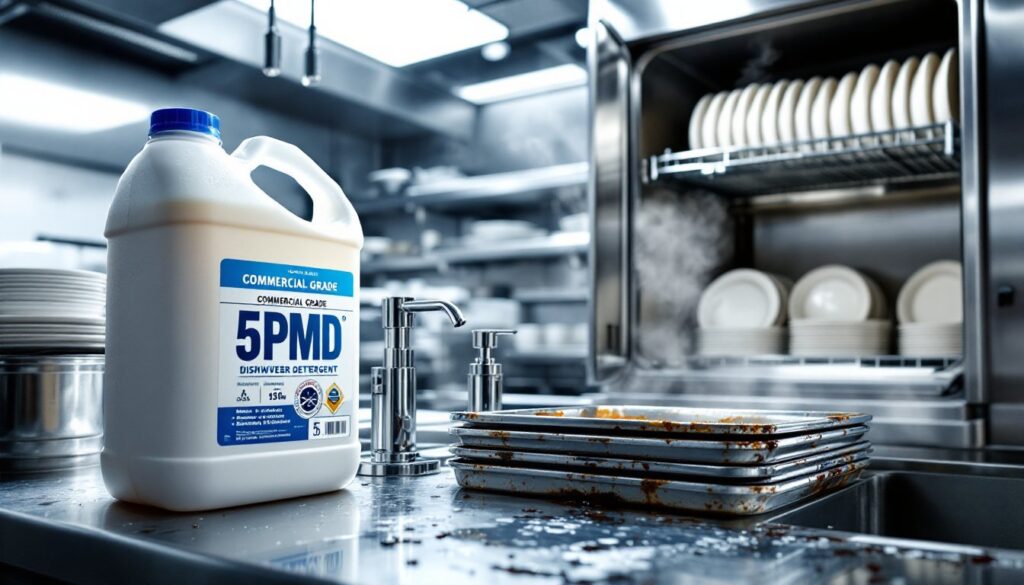
Upgrading to commercial dishwasher detergent isn’t just for restaurants. Homeowners dealing with hard water, heavy grease, or high-volume dishwashing, think big families, home caterers, or anyone hosting frequent gatherings, often find residential detergents fall short. Commercial formulas bring industrial-grade cleaning chemistry into domestic kitchens, cutting through baked-on grime and mineral deposits that leave consumer products struggling. But stronger doesn’t always mean better for every situation. Understanding what separates commercial detergents from supermarket brands, how they work, and whether they’re right for a home dishwasher takes more than grabbing the biggest jug at the janitorial supply store.
Table of Contents
ToggleKey Takeaways
- Commercial dishwasher detergent contains higher alkalinity (pH 10-13) and stronger chelating agents than residential products, making it ideal for tackling heavy grease, hard water deposits, and high-volume dishwashing in home kitchens.
- Home users can save significantly on cost per load—roughly $0.07-0.25 compared to $0.30-0.50 for premium residential pods—making commercial detergent economical for families running multiple daily loads.
- Liquid commercial detergents offer the easiest home transition, while powder formulas provide maximum economy; solid block detergents require expensive dispensers and are best suited for professional settings.
- Proper dosing is critical for safety and results—use only 0.5-1 ounce per cycle in home dishwashers, wear protective gloves, and always run hot water before starting to activate the detergent’s aggressive cleaning compounds.
- Water hardness, dishwasher model compatibility, and soil type (grease vs. starch) determine whether commercial dishwasher detergent is right for your home, so test your water and check your machine’s manual before switching.
- Compare cost per load rather than container price, purchase from janitorial suppliers or restaurant equipment dealers locally to save on shipping, and start with trial sizes to confirm compatibility before buying bulk quantities.
What Is Commercial Dishwasher Detergent and How Does It Differ?
Commercial dishwasher detergent is formulated for high-temperature, high-volume dish machines found in restaurants, hospitals, and institutional kitchens. These products contain higher concentrations of alkaline cleaners (typically sodium hydroxide or potassium hydroxide), stronger surfactants, and aggressive sequestering agents designed to bind minerals in hard water.
The key difference from residential detergents lies in chemistry and dosing. Consumer products are engineered for lower water temperatures (120-140°F) and shorter cycles. Commercial detergents expect hotter water, often 150-180°F, and leverage that heat to activate more aggressive cleaning compounds. They’re also dispensed automatically through mechanical pumps in precise amounts, not poured freehand.
Another distinction: pH levels. Commercial formulas run highly alkaline (pH 10-13), which excels at breaking down proteins and fats but can etch glassware or damage certain finishes if misused. Residential detergents sit closer to pH 8-10 for safer handling and broader material compatibility.
Packaging reflects usage patterns too. Commercial detergents come in 5-gallon pails, 50-pound bags, or solid blocks that last weeks in a busy kitchen. Residential bottles hold 40-75 ounces and last a household a month or two. That economy of scale matters for cost per load but requires proper storage and dispensing equipment at home.
Key Benefits of Using Commercial-Grade Dishwasher Detergent
The primary advantage is cleaning power. Commercial detergents tackle challenges residential products struggle with: carbonized grease from sheet pans, starch films from pasta water, and protein buildup from roasting pans. If a home cook regularly deals with restaurant-level messes, say, someone who meal-preps for a week or runs a cottage food business, commercial formulas cut through grime that leaves standard detergents needing multiple cycles.
Hard water performance is another major benefit. High mineral content (calcium, magnesium) interferes with cleaning and leaves white film on dishes. Commercial detergents contain chelating agents like EDTA or phosphonates in concentrations that bind those minerals before they deposit. In regions with 10+ grains per gallon hardness, the difference is visible immediately.
Cost efficiency matters for high-volume users. A 5-gallon pail of commercial liquid detergent costs $40-80 and provides 300-600 loads depending on dosing, roughly $0.07-0.25 per load. Premium residential pods run $0.30-0.50 each. That gap adds up for families running two loads daily.
Finally, faster cycles become possible. The aggressive chemistry works quickly, meaning some commercial machines finish wash cycles in 90 seconds to 3 minutes. While home dishwashers can’t match that speed due to different spray arm designs and pump pressures, the stronger detergent does reduce the need for pre-rinsing or re-washing, saving time indirectly.
Types of Commercial Dishwasher Detergents Explained
Commercial detergents come in three main formulas, each with trade-offs in dispensing, storage, and effectiveness.
Powder vs. Liquid vs. Solid Formulas
Powder detergents are the most economical per load. They dissolve quickly in hot water and contain high concentrations of alkaline salts and bleaching agents. A 50-pound box costs $60-100 and lasts months in a home kitchen. The downsides: they can cake if exposed to moisture, and manual dosing leads to inconsistent results. Too much leaves residue: too little means dirty dishes. Powder works best in homes with a scoop and discipline.
Liquid detergents offer the easiest transition for homeowners. They pour like residential products and don’t require special dispensers, though automatic pumps improve accuracy. Liquids handle cold starts better than powder and won’t clog spray arms. They cost $0.10-0.30 per load typically, middle ground between powder and pods. Storage is bulkier, and some formulas separate if left sitting, requiring shaking before use.
Solid detergents come as compressed blocks loaded into automatic dispensers that shave off precise amounts per cycle. They’re mess-free, nearly impossible to overdose, and stable for years in storage. Restaurants favor them for consistency. The catch: dispensers cost $80-200, making them impractical for most home kitchens. Solids also require specific water flow rates to activate properly, which home dishwashers may not provide.
Many home users running commercial detergents choose liquid for convenience or powder for economy. Solids stay in the professional realm unless someone’s setting up a serious home operation.
Choosing the Right Commercial Dishwasher Detergent for Your Needs
Start with water hardness. Test with a home kit or check municipal water reports, most utilities list hardness online. Below 7 grains per gallon, standard formulas work fine. At 10-15 grains, look for detergents with added chelators or use a separate rinse aid. Above 15 grains, some commercial detergents still struggle without a water softener installed upstream.
Next, consider dishwasher compatibility. Not all home machines handle commercial detergents well. High-efficiency models with sensors may throw errors if detergent foams differently than expected. Older mechanical dishwashers with simple timers adapt more easily. Check the manual’s detergent recommendations, some manufacturers void warranties if non-residential products damage seals or pumps.
Match the detergent to the soil type. Heavy grease and proteins (from roasting, frying, or meat-heavy meals) need high-alkaline formulas with degreasing surfactants. Starch and carbohydrates (pasta, rice, oatmeal) benefit from enzymes like amylase, though many commercial formulas skip enzymes in favor of raw alkaline power. If cleaning mostly glassware or light residue, commercial strength might be overkill, stick with residential products or dial back dosing.
Pay attention to NSF certification if using detergent in a permitted home food business. NSF-listed products meet safety standards for food-contact surfaces. For personal use, it’s optional but signals third-party testing.
Finally, factor in storage and handling. A 5-gallon jug requires a pump or careful pouring. Kitchen organization strategies help manage bulk supplies safely. If storing in a garage or basement, keep containers sealed and away from temperature extremes, freezing can destabilize liquids, and heat accelerates powder clumping.
How to Use Commercial Dishwasher Detergent Safely and Effectively
Safety first: commercial detergents are caustic. Wear nitrile gloves when handling concentrates, latex tears too easily against alkaline solutions. If pouring powder or liquid, use safety glasses to prevent splashes. Keep containers sealed and labeled, especially in homes with children or pets. Accidental ingestion or skin contact requires immediate rinsing and, depending on severity, a call to poison control.
Start with lower doses than commercial settings use. A restaurant dish machine might use 1-2 ounces per cycle: a home dishwasher often needs just 0.5-1 ounce due to smaller capacity and different spray patterns. Overdosing wastes product, leaves residue, and can etch glassware. Some users fill the detergent cup only halfway initially, then adjust based on results.
Water temperature matters. Run the kitchen faucet until it’s hot before starting the dishwasher, this ensures the machine draws heated water from the start. If the home water heater sits below 140°F, consider raising it to 140-150°F (but install anti-scald devices at sinks to prevent burns). Some commercial detergents simply won’t activate properly in lukewarm water.
Use a rinse aid in the dispenser. Commercial formulas clean aggressively but don’t always include rinsing agents. A separate rinse aid prevents spotting and speeds drying. Adjust the rinse aid dispenser to a medium setting and tweak from there.
Monitor for damage. After a few weeks, inspect glassware for etching (a cloudy, permanent haze) and check dish edges for white film. Either signal too much detergent, water too soft, or a formula too harsh for the load. Many product testing resources evaluate how detergents perform on different materials, which can guide adjustments.
Never mix detergents. Combining commercial and residential products, or adding DIY boosters like vinegar or baking soda, can create unexpected reactions or neutralize cleaning agents. Stick with one formula and adjust dosing instead.
Top Considerations When Buying Commercial Dishwasher Detergent
Source matters. Janitorial supply stores, restaurant equipment dealers, and some big-box retailers (Cash & Carry, Costco Business Centers) carry commercial detergents. Online vendors ship bulk quantities but check shipping costs, liquids are heavy and expensive to move. Buying local saves on freight and allows for easier returns if a formula doesn’t work.
Read the label for active ingredients. Sodium or potassium hydroxide should appear near the top for grease-cutting power. Sequestering agents (EDTA, phosphonates, or citrates) handle hard water. Chlorine or oxygen bleach tackles stains. Avoid formulas with excessive fragrances, they’re unnecessary and can leave residues.
Phosphate content is a legal consideration. Many states restrict phosphates in detergents to protect waterways, though commercial products sometimes have exemptions. Check local regulations if buying high-phosphate formulas. Low-phosphate or phosphate-free versions clean nearly as well in most conditions and avoid regulatory hassles.
Shelf life varies. Powder stays stable for years if kept dry. Liquids last 1-2 years sealed, but check expiration dates on opened containers, some separate or lose potency after 6-12 months. Solids are nearly immortal but again, require dispensers.
Trial sizes or smaller containers let homeowners test a product before committing to a 5-gallon pail. Some suppliers sell quart bottles or sample packs. It’s worth the extra cost per ounce to confirm compatibility with a dishwasher and water conditions.
Brand reputation counts in commercial settings because consistency matters across thousands of loads. For home use, smaller regional manufacturers often offer competitive formulas at lower prices. Cleaning product comparisons can highlight effective options beyond the biggest names.
Finally, compare cost per load, not per container. A $70 jug providing 500 loads beats a $30 bottle good for 150 loads. Calculate based on the dose needed for actual results, not the manufacturer’s optimistic estimate. Track real-world usage for a month to nail down true cost.