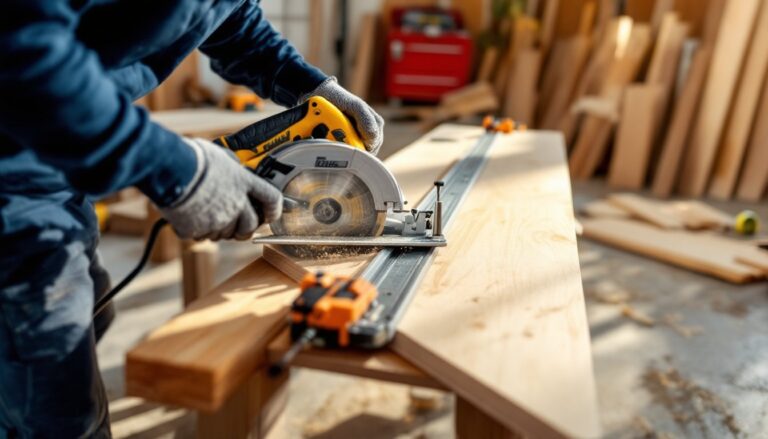
Whether framing a shed, trimming deck boards, or breaking down plywood for a cabinet project, the blade spinning on a circular saw makes all the difference. Diablo circular saw blades have built a reputation among professional carpenters and weekend warriors alike for cutting cleaner, lasting longer, and staying sharper than bargain-bin alternatives. But with dozens of tooth counts, coatings, and specialty configurations available, choosing the right Diablo blade can feel overwhelming. This guide breaks down what makes Diablo blades different, which types suit specific home projects, and how to pick the one that’ll handle the job without burning through the user’s budget or patience.
Table of Contents
ToggleKey Takeaways
- Diablo circular saw blades use TiCo high-density carbide and precision-ground teeth that stay sharp up to four times longer than budget alternatives, delivering superior cut quality and longevity.
- Choosing the right Diablo blade requires matching tooth count to your project: 24-tooth for framing, 40-tooth for general-purpose work, and 60+ teeth for finish cuts on visible surfaces.
- Proper maintenance—including regular cleaning, correct storage, and appropriate feed rates—maximizes Diablo blade performance and extends lifespan by years.
- Laser-cut stabilizer vents and Perma-Shield coatings in Diablo blades reduce vibration, heat buildup, and pitch buildup, preventing burn marks and keeping your saw from bogging down.
- Always verify blade diameter, arbor size, and kerf thickness match your specific circular saw before purchasing to ensure optimal performance and battery life on cordless models.
Why Diablo Circular Saw Blades Stand Out in the Market
Diablo blades aren’t just marketing hype. They’re manufactured by Freud, a company with decades of carbide tooling expertise, and the difference shows up in three key areas: carbide grade, tooth geometry, and anti-friction coatings.
Most budget blades use basic C3 carbide teeth that dull quickly when cutting treated lumber, engineered wood, or anything with embedded nails. Diablo uses TiCo high-density carbide, a blend of titanium and cobalt that stays sharp up to four times longer in real-world use. That means fewer mid-project blade swaps and cleaner cuts from start to finish.
The tooth design matters just as much as the material. Diablo blades feature laser-cut stabilizer vents that reduce vibration and heat buildup, two factors that cause wandering cuts and premature dulling. The Perma-Shield non-stick coating reduces friction and pitch buildup, which keeps the blade running cooler and prevents the saw from bogging down in resinous softwoods like pine or fir.
Another standout feature: precision-ground teeth. Diablo grinds each carbide tip to exact angles using CNC equipment, which translates to less tear-out on cross-cuts and cleaner edges on rip cuts. For finish work where the cut edge will be visible, that grinding precision saves time on sanding and touch-ups. Many pros and experienced woodworking enthusiasts choose Diablo for this reason, the blade does half the finish work before the sandpaper even comes out.
Types of Diablo Circular Saw Blades for Different Projects
Diablo offers blades optimized for different materials and cut types. Picking the wrong blade won’t ruin a project, but it’ll make the job slower, louder, and rougher than it needs to be.
Framing and General Purpose Blades
For rough carpentry, framing walls, cutting joists, or breaking down dimensional lumber, a 24-tooth framing blade is the workhorse. The low tooth count means larger gullets (the spaces between teeth) that clear sawdust quickly, preventing the blade from binding in thick stock. Diablo’s framing blades handle nominal 2x lumber (actual 1.5″ thickness) and engineered materials like LVL and LSL without complaint.
These blades prioritize speed over finish. Expect some tear-out on the exit side of cross-cuts, but that’s acceptable when the lumber is getting covered with sheathing or drywall. A 7-1/4″ Diablo D0724A (24-tooth) is a common choice for jobsite work, it rips and cross-cuts treated lumber, cuts through the occasional nail without chipping, and costs around $15–$20, depending on regional pricing and retailer.
For homeowners tackling a mix of tasks, deck building, shed construction, and occasional trim work, a 40-tooth general-purpose blade splits the difference. It won’t frame as fast as a 24-tooth blade, but it leaves a cleaner edge on cross-cuts and handles plywood and OSB without excessive splintering. The Diablo D0740A or D0741A (the latter includes a thin kerf for less powerful saws) are solid all-around options.
Finish and Fine-Tooth Blades
When the cut needs to be furniture-grade, installing hardwood flooring, trimming out a window casing, or cutting melamine shelving, reach for a 60-tooth or higher finish blade. The increased tooth count produces smaller chips and smoother edges, reducing the risk of splintering on veneered plywood or laminated panels.
Diablo’s D0760A (60-tooth) and D1080N (80-tooth) are designed for ultra-smooth cross-cuts in hardwoods, softwoods, and composite materials. The 80-tooth variant is overkill for most DIY work, but it’s ideal for cutting pre-finished materials where any tear-out will show. Both blades feature ATB (alternate top bevel) tooth geometry, which slices wood fibers cleanly rather than ripping through them.
One caution: high tooth count blades cut slower and generate more heat. Feed the saw steadily without forcing it, and let the blade do the work. Pushing too hard can scorch the cut edge or overheat the carbide tips, shortening blade life.
For specialized tasks, Diablo offers non-ferrous metal blades (cutting aluminum trim or metal roofing) and fiber cement blades (for HardiePlank siding). The Steel Demon line handles thin-gauge steel and metal studs, using modified tooth geometry and carbide formulation for cutting metal cleanly without creating dangerous sparks or burrs. These aren’t general-purpose blades, use them only for the materials they’re designed for.
Choosing the Right Diablo Blade for Your Home Project
Matching the blade to the project requires answering three questions: What material? What type of cut? What finish quality?
Material type drives tooth count and carbide formulation. Solid lumber (pine, oak, cedar) works with any general-purpose or framing blade. Plywood and other sheet goods benefit from higher tooth counts to minimize chipping of the outer veneers. Melamine, laminate, and pre-finished panels need 60+ teeth to avoid blown-out edges. For pressure-treated lumber, look for blades rated for treated wood, the copper preservatives are harder on carbide than untreated stock.
Cut type matters too. Rip cuts (along the grain) don’t require as many teeth as cross-cuts (across the grain). A 24-tooth blade rips dimensional lumber efficiently, while a 40–60 tooth blade cross-cuts cleaner. If the project involves both, say, ripping studs to length and trimming plywood, a 40-tooth blade is the best compromise.
Finish quality determines whether the cut edge will be hidden or visible. Framing, subflooring, and rough carpentry can tolerate tear-out and rough edges. Trim work, cabinetry, and furniture projects cannot. For visible cuts, invest in a 60-tooth finish blade and make test cuts on scrap material first.
Blade diameter and arbor size must match the saw. Most cordless and corded circular saws use a 7-1/4″ blade with a 5/8″ arbor (the center hole). Smaller trim saws and some compact models take a 6-1/2″ blade. Always check the saw’s manual or the blade guard label before buying.
Kerf thickness, the width of the cut the blade makes, affects battery life and motor strain on cordless saws. A thin kerf blade (around 0.061″) removes less material per cut, reducing drag and extending runtime. Standard kerf blades (0.090″) are more stable and less prone to deflection in thick hardwoods. For most DIYers, thin kerf is the better choice unless working exclusively with dense hardwoods or thick stock.
One final consideration: worm drive vs. sidewinder saws. Worm drive saws spin blades on the left side and often require left-handed blade designs for optimal chip ejection. Diablo makes blades for both configurations, so verify compatibility before ordering online.
Maximizing Performance and Blade Longevity
Even the best carbide blade will perform poorly, and wear out fast, if basic maintenance and usage practices get ignored.
Keep blades clean. Pitch, resin, and sawdust buildup on the teeth creates friction, generates heat, and forces the saw motor to work harder. After cutting pine, treated lumber, or any resinous wood, spray the blade with a dedicated pitch remover or soak it in a shallow pan of degreaser for 10–15 minutes. Scrub the teeth with a nylon brush (never a wire brush, which can damage the carbide), rinse, and dry thoroughly before storage.
Store blades properly. Tossing a blade loose in a toolbox invites chipped carbide and bent teeth. Hang blades on pegboard hooks, store them in the original packaging, or use blade guards (cheap plastic sleeves that protect the teeth). Keep them dry to prevent rust on the steel plate.
Use the right feed rate. Forcing a circular saw through a cut generates heat, overworks the motor, and dulls carbide faster. Let the blade’s rotation do the cutting, apply steady, moderate pressure and listen to the saw. If the motor bogs down or the blade starts smoking, slow the feed rate. For dense hardwoods or thick stock, make a shallow scoring pass first, then complete the cut in a second pass.
Support the workpiece. Unsupported cuts cause the blade to bind, deflect, or kick back. When cutting sheet goods, support both sides of the cut line with sawhorses or a cutting table. For long rip cuts, use a straightedge guide clamped to the material. According to hands-on tool testing, proper workpiece support reduces blade deflection and improves cut accuracy by as much as 30%.
Wear appropriate PPE. Circular saws throw chips at high speed and generate noise levels exceeding 100 decibels. Always wear safety glasses or a face shield, hearing protection, and a dust mask when cutting treated lumber or engineered products that contain formaldehyde resins. Kickback is a real hazard, keep hands clear of the blade path and never reach under the workpiece while the blade is spinning.
Know when to replace. Carbide blades can be sharpened, but for most DIYers, replacement is more cost-effective. Signs a blade is done: burn marks on cut edges, excessive tear-out even on straight cuts, the saw laboring more than usual, or visible damage to carbide tips. A dull blade is dangerous, it requires more force to push through material, increasing the risk of kickback and loss of control.
Blade life varies with use. A homeowner cutting a few hundred linear feet per year might get 5–10 years from a Diablo blade. A contractor framing houses weekly might replace blades every few months. Track performance, not calendar time.
Conclusion
Diablo circular saw blades deliver measurable improvements in cut quality, blade life, and ease of use compared to generic alternatives. Choosing the right tooth count and blade type for the material and finish requirements turns frustrating, splintered cuts into clean, professional results. With proper maintenance, regular cleaning, correct storage, and mindful feeding, these blades will handle years of deck builds, remodels, and weekend projects without complaint.