Crosley appliances might not top everyone’s shortlist when shopping for laundry equipment, but these units have carved out a niche among budget-conscious homeowners and renters tackling tight spaces. If you’re renovating a small laundry closet, outfitting a rental property, or simply want functional machines without very costly, Crosley washer and dryer combos deserve a closer look. This guide breaks down what you’re actually getting, features, trade-offs, installation quirks, and whether these appliances hold up beyond the first load.
Table of Contents
ToggleKey Takeaways
- Crosley washer and dryer units offer compact designs and affordable pricing ($300–$900 per unit), making them ideal for renters, apartments, and tight spaces where full-size machines won’t fit.
- These budget-friendly appliances have smaller capacities (1.6–2.5 cu ft washers) suitable for light to moderate use, but families generating more than 10 loads weekly will face daily multiple-load requirements.
- Installation is DIY-friendly for most Crosley models, but careful attention to water drainage (gravity drain systems), electrical requirements (120V or 240V), and proper dryer venting is critical to avoid performance issues and fire hazards.
- Routine maintenance—including monthly lint filter cleaning, quarterly drain hose inspections, and consistent gasket wiping—extends the lifespan of Crosley washers and dryers beyond their typical 5–7 year service life.
- Crosley washer and dryer sets typically last several years with realistic expectations about capacity limits, making them cost-effective for secondary laundry setups or temporary housing rather than primary household use.
What Makes Crosley Washer and Dryer Units Stand Out?
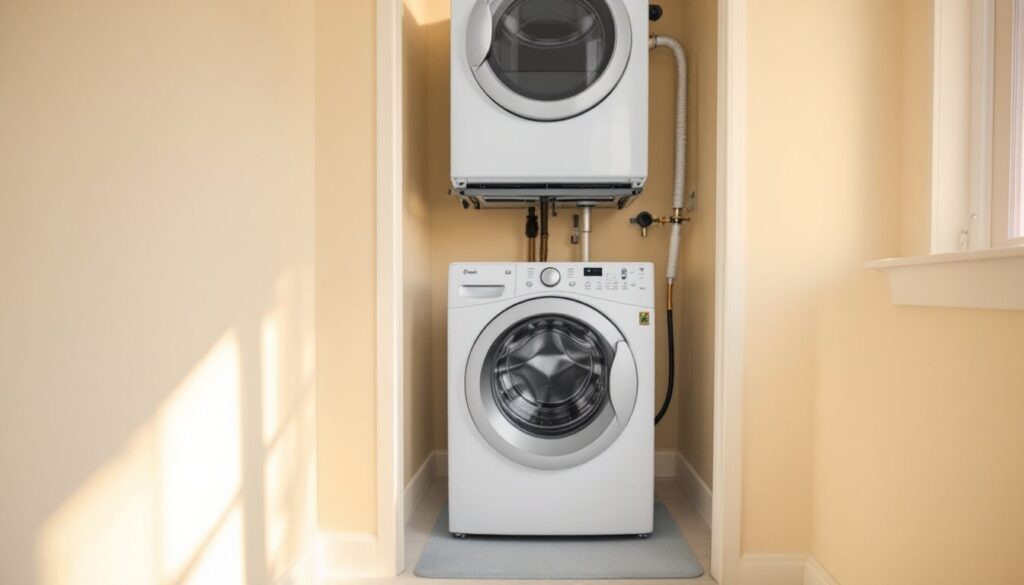
Crosley leans hard into compact design and affordability. Most models are portable or apartment-sized units, think 1.6 to 2.5 cubic foot capacity washers paired with comparable dryers. That’s smaller than the standard 4.5 cu ft front-loader you’d find in a suburban home, but it’s a good match for closets, small bathrooms, or stacked installations in older homes with tight doorways.
These machines often skip premium features like Wi-Fi connectivity, steam cycles, or inverter motors. What you get instead: straightforward mechanical controls, basic cycle options (normal, delicate, quick wash), and manual water fill options on some portable models. That last feature is surprisingly handy if you’re installing in a space without dedicated laundry hookups, you can fill via a utility sink or even a bathtub faucet using the included adapter hose.
Key Features and Specifications
Crosley washers typically offer:
- Capacity: 1.6–2.5 cu ft for washers: 2.6–3.5 cu ft for dryers
- Power requirements: 120V standard outlet (most models), though some full-size dryers need 240V
- Weight: Portable units around 60–80 lbs, making solo moves possible but awkward
- Cycle options: 5–8 preset programs, usually including delicate, heavy-duty, and quick wash
- Spin speed: 1,200–1,400 RPM on washers (adequate for removing most water before drying)
- Venting: Electric dryers require standard 4-inch rigid or flexible duct: some models offer ventless condenser options
Dryers in the Crosley lineup are almost all electric resistance models. Gas versions are rare in this brand. Expect drying times of 60–90 minutes for a full load, longer if you’re air-drying synthetics on low heat.
One specification that catches DIYers off guard: many Crosley portable washers use a gravity drain hose instead of a powered pump. That means your drain point needs to be level with or below the machine’s drum, draining into a utility sink works: draining upward into a standpipe might not.
Pros and Cons of Choosing Crosley for Your Laundry Room
Pros:
- Price point: Entry-level models start around $300–$500 per unit, roughly half the cost of mainstream brands
- Space efficiency: Stackable and compact designs fit closets as narrow as 24 inches wide
- No hookup required (some models): Portable washers with manual fill eliminate the need for permanent plumbing
- Lightweight enough for DIY installation: You won’t need a dolly crew to get these upstairs
Cons:
- Capacity limitations: A 2.0 cu ft washer handles about 6–8 pounds of laundry per load, roughly one outfit per person per day. Families of four will run multiple loads daily.
- Build quality: Expect plastic tubs, basic control boards, and shorter lifespans (5–7 years typical) compared to commercial-grade brands
- Noise: Spin cycles can hit 70–75 dB, louder than a dishwasher, quieter than a shop vac. Rubber anti-vibration pads help but don’t eliminate it.
- Limited parts availability: Independent repair techs often stock parts for Whirlpool, LG, and Samsung. Crosley components may require online ordering with longer lead times.
- No smart features: If you want cycle notifications on your phone or remote start, look elsewhere.
The sweet spot for Crosley is rental properties, in-law suites, or as a secondary laundry setup for a workshop or garage. They’re less suited to primary laundry duty in households generating more than 10 loads per week.
Popular Crosley Washer and Dryer Models Compared
As of 2026, Crosley’s lineup includes several configurations. Here’s how the most common models stack up:
Crosley WCWD2208:
- Combo washer-dryer unit (all-in-one)
- 2.0 cu ft capacity
- Ventless condenser dryer (no duct required)
- 120V plug
- Best for: Apartments with zero laundry infrastructure
Crosley CWD2401W (washer) + CDD2401W (dryer):
- Stackable pair
- 2.4 cu ft washer, 3.5 cu ft dryer
- Dryer requires 240V outlet and venting
- Best for: Small closets with existing electric dryer hookup
Crosley Portable Top-Load (model varies):
- 1.6 cu ft capacity
- Manual or automatic fill via faucet adapter
- Gravity drain
- Wheels for mobility
- Best for: Renters or seasonal use (RVs, cabins)
Many appliance reviews from sources like Good Housekeeping focus on mainstream brands, so direct head-to-head testing for Crosley is sparse. User reviews suggest the WCWD2208 combo unit gets the most complaints about long cycle times (up to 3 hours wash-to-dry), while the stackable pairs perform closer to budget expectations if you manage load size.
Installation Tips for DIY Homeowners
Crosley washers and dryers are DIY-friendly, but the process varies by model type.
Portable washers:
- Unpack and inspect. Check the drum for shipping bolts, most portable models don’t use them, but verify in the manual.
- Attach the faucet adapter to your utility sink or tub spout. Hand-tighten: don’t over-torque or you’ll crack the plastic threads.
- Position the drain hose so it empties into a sink or floor drain. The hose end must be below the top of the drum for gravity flow.
- Plug into a grounded 120V outlet. Avoid extension cords, they’re not rated for the sustained 10–12 amp draw during spin cycles.
Stackable or fixed units:
- Verify electrical. If your dryer is 240V, confirm you have a matching outlet (NEMA 10-30 or 14-30). Adapters exist, but check local codes, some jurisdictions require a licensed electrician to modify dryer circuits.
- Install the stacking kit (sold separately, typically $30–$60). Use the included brackets and screws. Don’t skip this, units can shift during spin and topple without proper bracing.
- Connect water supply lines. Crosley washers use standard 3/4-inch hose fittings. Replace rubber hoses with braided stainless steel ($15–$20 per pair) to prevent burst failures.
- Vent the dryer using rigid or semi-rigid 4-inch duct. Keep runs under 25 feet total length, subtracting 5 feet for every 90-degree elbow. Flexible foil duct is a fire hazard and often prohibited by code, check IRC Section M1502 if your jurisdiction adopts the International Residential Code.
- Level the washer using a bubble level and adjusting the feet. An unlevel washer will walk across the floor during spin. Aim for less than 1 degree of tilt in any direction.
Safety note: Wear work gloves when handling metal duct edges, and use eye protection if cutting vent holes with a hole saw. Dryer vents accumulate lint, inspect and clean them every 6–12 months to reduce fire risk.
Maintenance and Troubleshooting Your Crosley Appliances
Routine upkeep extends the life of budget appliances more than premium ones, there’s less engineering margin for neglect.
Monthly tasks:
- Clean the lint filter on your dryer before every load. A clogged filter doubles drying time and overheats the element.
- Wipe down door gaskets on front-load washers with a 1:1 vinegar-water solution to prevent mildew.
- Run an empty hot wash with 2 cups of white vinegar to dissolve detergent buildup in the drum and hoses.
Quarterly tasks:
- Inspect water inlet screens. Shut off the supply valves, disconnect hoses, and pick out any sediment trapped in the mesh filters. Low water pressure during fill cycles often traces back to clogged screens.
- Check the drain hose for kinks or clogs. Hair and lint can block the outlet, causing overflow errors.
- Vacuum behind the dryer to remove lint accumulation around the motor and vent connection.
Common issues and fixes:
- Washer won’t spin: Check if the load is unbalanced. Crosley’s smaller drums are sensitive, redistribute heavy items like towels and restart the cycle.
- Dryer takes forever: Verify the vent path is clear. Even a partially blocked vent doubles drying time. Disconnect the duct, run the dryer, and feel the exhaust, if airflow is weak, the vent needs cleaning.
- Error codes (if digital display): Consult the manual. “E1” usually indicates a door latch issue: “E3” often means a drain problem.
- Excessive vibration: Tighten the leveling feet and ensure the unit sits on a solid floor. Washers on second-story wood floors may need a rubber anti-vibration mat ($20–$40) or a plywood platform spanning multiple joists to distribute load.
Keep in mind that many appliance maintenance guides from Real Simple focus on high-efficiency models, but the fundamentals, lint removal, hose inspection, and leveling, apply across all brands.
If your unit fails within the first year, contact Crosley’s warranty service. Beyond that, weigh repair costs against replacement. If a control board or motor fails and parts plus labor exceed $200, you’re often better off replacing a budget appliance than sinking money into repairs.
Where to Buy and What to Expect for Pricing
Crosley washers and dryers are sold primarily through:
- Online retailers: Amazon, Wayfair, and the manufacturer’s site
- Big-box stores: Home Depot and Lowe’s carry select models, though in-store inventory is hit-or-miss
- Appliance specialty shops: Regional dealers may stock or special-order Crosley units
Pricing as of 2026:
- Portable washers: $300–$450
- Stackable washer: $400–$600
- Electric dryers: $350–$550
- Combo washer-dryer units: $700–$900
Shipping costs vary, some retailers include free curbside delivery: others charge $50–$100. White-glove installation (hauling upstairs, hookup, haul-away of old units) typically adds $150–$250.
Extended warranties are often pushed at checkout. Crosley’s standard warranty covers 1 year parts and labor. Extended plans run $60–$120 for an additional 2–3 years. Whether that’s worth it depends on your risk tolerance, these machines aren’t expensive to replace outright, and warranty claims can take weeks to process.
Seasonal sales (Memorial Day, Black Friday, January clearance) can knock 15–20% off list prices. If you’re not in a rush, wait for a holiday weekend.
One last consideration: delivery lead times stretched to 4–6 weeks during supply chain disruptions in the early 2020s. As of 2026, most models ship within 1–2 weeks, but confirm stock before assuming quick turnaround.
For additional context on appliance shopping and space planning, resources like The Kitchn offer insights on integrating compact appliances into small homes, though their focus skews toward kitchen equipment rather than laundry.
Bottom line on value: Crosley washer and dryer sets make sense if your budget caps around $800–$1,000 for the pair and your space constraints rule out full-size machines. They’re not built for decades of service, but they’ll handle light to moderate use for several years, long enough to justify the cost if you’re realistic about capacity limits and willing to stay on top of basic maintenance.